Iron Dragon

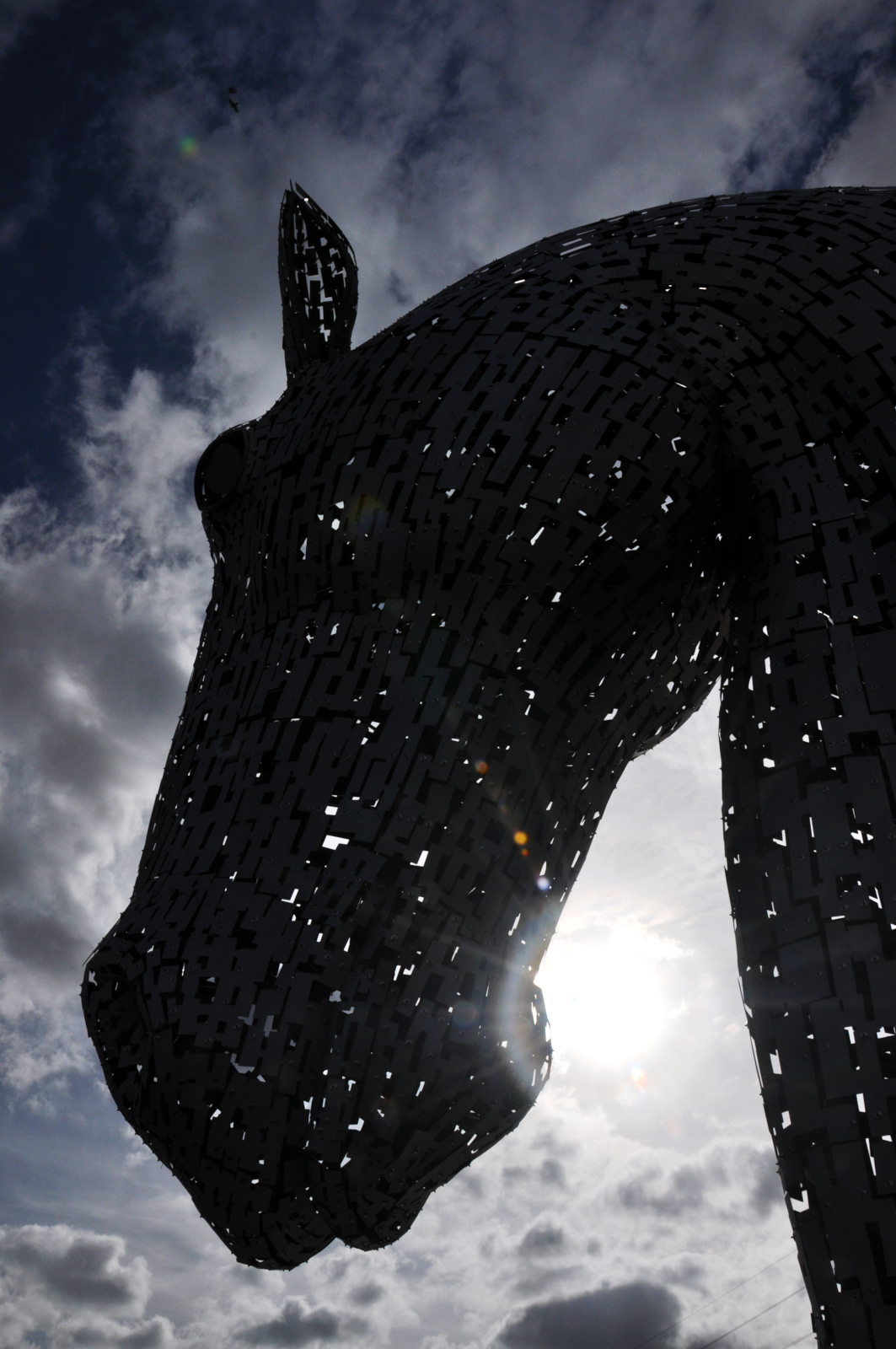
I’m confident that the dragon in question is steel, rather than iron. We saw this beauty at the Scottish Wild Foods Festival earlier this year. I’m not entirely sure why Tir na nog has a massive fire-breathing metal dragon. Now that I think about it a better question is: if you can have one, why wouldn’t you?


The fiend advanced in a shriek of iron against iron that skipped ears and cut straight to the soul. It opened its jaws and filled the air with white-hot fire. The canopy of leaves above the monster shrivelled in the heat then burst into flames.

Arthur’s spear shook in his hand. It seemed too feeble a weapon against this foe. He wished he had the bravery and might of his namesake, the King Arthur of legend who would surely have had no bother with such a vile monstrosity.

He retreated a step as the dragon screeched on past the final trees. In a few short minutes it would be within the fields that bordered his village. Arthur doubted he would last that long.

Shouting for help did no good. The words merely whispered from his fear-clenched throat. It wouldn’t have helped anyway. He was out here as punishment for being the boy who cried wolf one time too many. This evening, his father had told him that if he was so good at spotting wolves he could go out and stop them himself. Everyone else was fed up with him. No help would come. What could he do? Yelling ‘dragon’ was unlikely to change anyone’s mind about him.

Metal screamed into the night again as the dragon flexed its long neck to face Arthur. He raised his spear. If he had to die it should be facing his enemy. The dragon’s hide glowed orange in the spreading firelight. Arthur’s spear tip matched it in that. He spared a glance for his pathetic weapon. A toothpick from the dragon’s viewpoint, no doubt.

An arrow skimmed past his shoulder, between his ear and his raised arm. It plinked off the dragons iron hide which rang like a bell. A second arrow followed a moment later with as little effect.

“Move, fool!” came the shout from behind him. The most welcome voice he’d ever heard. His big sister, Margery.

Arthur dived to the side and flames licked the space where he had been standing. Margery had gone the other way, judging from the path of the next three arrows. The dragon held still as if it was considering which of them it should attack first.

Margery’s next arrow clattered uselessly against the iron fiend’s face. It was quickly followed by another. The arrow cut a whistling path through the air and slammed into the dragon’s burning ruby eye to the unmistakable sound of shattering stone.

The dragon roared. It’s neck writhed in pain as it lashed its head about, spewing flame into the night.

Arthur darted forward. His chance was now or never. Never would probably be the end of him. Also, he didn’t want to be out-done by his sister, who was only a year older. He rammed his spear at the dragon’s face. His aim was true. The spear tip slammed into the burning red eye. Both ruby and iron shattered on the impact.

The roars took on a desperate edge. Arthur thought then that it would be the end of them both. He pulled his spear back. Without its tip it was nearly worthless as a weapon. Just a stick to fight an armoured monster. It was all he had.

The dragon whipped around like a giant snake and screeched back into the forest.

The Kelpie

Apparently I took this photo in September 2013, which seems like a long time ago. Being one of our more famous landmarks, I’m sure the content needs little introduction as being one of the two giant kelpie sculptures. They really are quite something to see in person, so if you’re into mythology at all and find yourself in Scotland, get yourself over to Falkirk.

Obviously, these behemoths are larger than ‘life’, but the thought immediately struck me, ‘What if they’re not?’


Water foamed and churned. Grant had expected that. You don’t summon a mythical sea-being without doing your homework. Kelpies were the most wild and powerful of all the water-spirits. Of course there would be a disturbance.

What he wasn’t prepared for was the shear area it covered. He frowned down at the ancient book. It was quite specific. The ritual would summon a single kelpie. Just one. But the seething waters filled the bay he’d chosen for the summoning, fully three-hundred metres across. The book had said that deep water was best for calling a kelpie, and this sheltered bay was the deepest water he could get to without a boat. For the first time it occurred to Grant that ‘best’ might not have been the correct term.

A silver-grey muzzle broke the surface, followed closely by a pair of nostrils so large that Grant could have walked into them without ducking. The kelpie snorted out a stream of sea-spray and foam that would have made a whale slink off to nurse its puniness. Grant shivered from a chill that had nothing to do with the frigid salt water soaking through his clothes. He was in trouble.

The Kelpie’s head rose high into the sky, blotting out the sun as it arched over to survey its situation. Massive hooves thudded on the narrow pebbled beach like a mountain landing. White foam and dark seaweed dappled its rippling hide as the beast hauled itself out of the water. Grant scrambled back as fast as the sudden false-tide from the kelpie’s departure dragged the bay’s water out to sea.

He hadn’t meant for this. He’d only wanted to show the other kids that it wasn’t nonsense. That his book of magic was real. That it worked. That he wasn’t just some weird nerd that liked reading too much and believed in more than he should.

The Kelpie was fully out of the water now. It took a first step forward, trampling the community boathouse with one massive hoof. Grant had no doubt his classmates would believe him now. He didn’t think it would win him any friends.

At last he looked up from the wreckage surrounding the car-sized hoof. The creature’s skin shimmered like waves on the sea. Not so much wet flesh and fur as it was a slice of oceanic depths, bound to an equine form and unleashed on an unsuspecting land. The kelpie’s rippling neck told of power beyond the mere muscles mimicked in its shape.

His heart stopped when he finally met the creature’s eye. An orb of captured fire burning with disdain for dry land and all that it held. A silent scream slipped through Grant’s tension-closed throat. The spell book, his only real hope of fixing this, tumbled from numb fingers. Water lapped at its bindings as the tide returned to the bay.

The Goblin Gate

This week’s image is from a recent walk in the woods from Cambo house in North East Fife through to the Kingsbarn Distillery. If you’re ever in the area I can thoroughly recommend it. The estate has a bit of everything from walled gardens and cafes to woodland trails. Staying in the house is entirely lovely (we’ve had weddings from each side of the family there) and an opportunity to be seized if it ever presents.

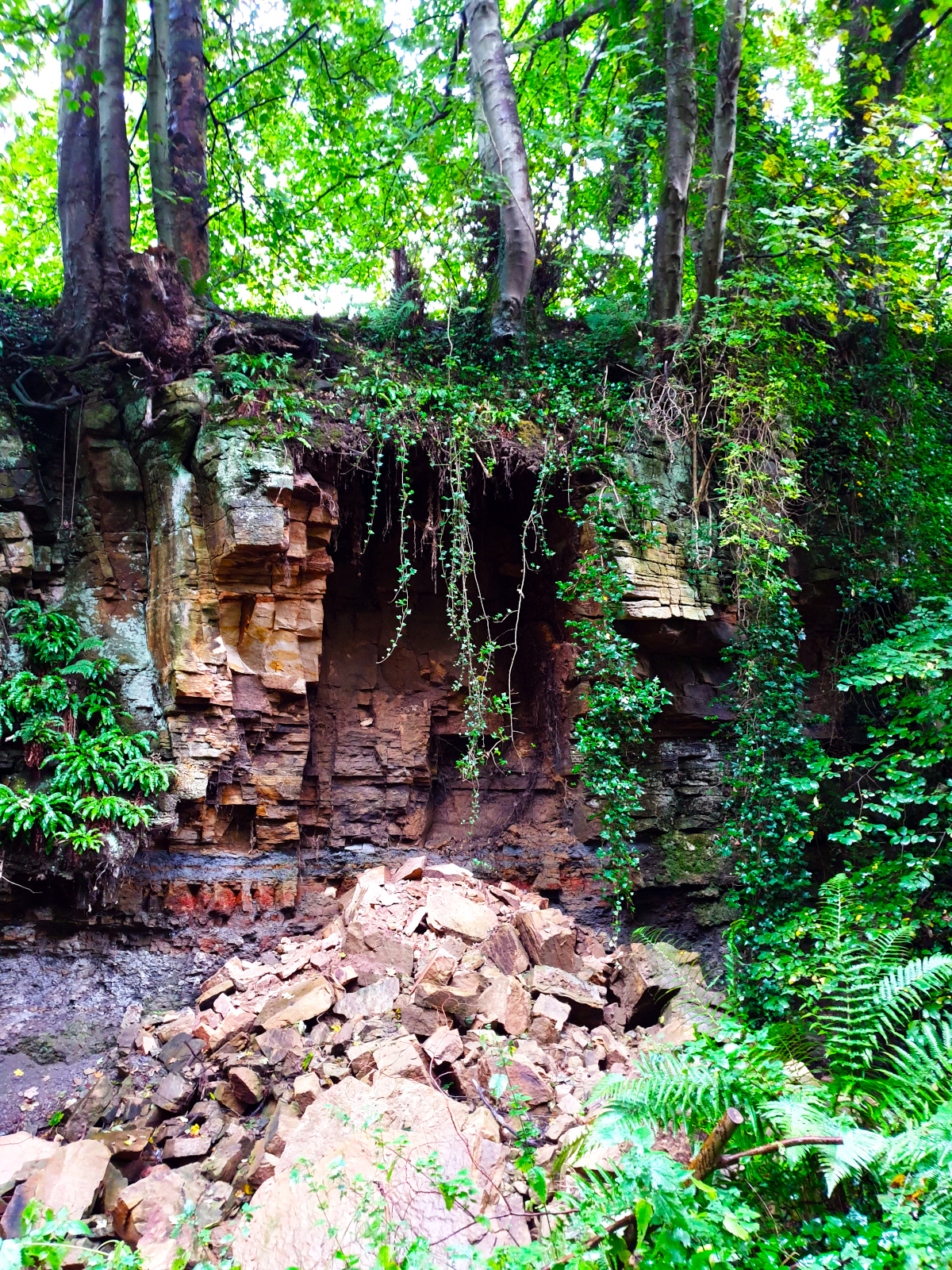
This particular walk led us along the course of a little burn. (The stream kind, not the fiery sort.) A path that we’d followed several times before. At some point between trips part of the cliff wall on the far side of the water had collapsed, minorly damming the stream. I was struck by how even and rectangular and, well, door-like the cleared space was. Which naturally left me musing who could be expected to come through…


Tom coughed and waved his hand ineffectually in front of his face, which did nothing but stir the dust up more. Despite the great splash of water that had drenched him as the rocks hit the stream, the collapsing cliff had kicked up a cloud of dense, dry, choking dust that made seeing impossible and breathing even harder.

He would realise, later, that he had been lucky not to be crushed to death in the landslide. But in the moment, there on the forbidden north bank of the Wilderburn, curiosity was alone in the driving seat.

It had started as any other day. The trek to school through the woods. He’d kept to the path, as he always did. His grandmother and parents had been clear on that front. There were fairies in the woods and, while they weren’t evil as such, they most certainly weren’t safe.

As usual, his eyes were drawn to the thick curtain of thriving plant life and cliff wall behind it. His family had been clear about that too. The north side of Wilderburn was off limits. But who among us hasn’t felt the draw of the forbidden.

That morning something had been different. Perhaps it was just the angle of the sun, low in the autumn sky. Perhaps a trick of the wind, lifting just the right strands of ivy at the perfect moment. Whatever the cause, a glint of silver had caught Tom’s wandering eyes. Unbidden, his feet had stopped, turned him, and brought his toes to the brink of the chuckling waters. There it was again — a twinkle of bright metal among the trailing leaves. It looked like a rune. Something from the old stories. But what was it doing here?

Tom hadn’t noticed crossing the burn. There had been no moment of decision to break the rules. A moment of clarity had broken through as his fingers reached to stroke the silvery rune letter. The scream of his conscience was what had saved him. He leaped aside at the exact moment the rock wall crumpled into the water.

His hands trembled with more than the chill from his soaked clothes. Something had happened. As the dust began to clear Tom could make out darkling shapes moving. Moving away from the cliff. That was when the voices started. Ugly guttural voices, as sharp as the spiky rune that had led to all this. He couldn’t understand their words. It was a language that Tom hadn’t heard before. But he recognised the sound of hate when he heard it.

Wizard and the Imp Location #1 — The Tower

This month we’ll take a look at the site that was my inspiration for the Tower of Sorcery.

Calais Muir Wood is a small patch of woodland about (34 hectares, which apparently counts as quite big these days) on the eastern edge of Dunfermline. It’s been something of a lifeline over the last 18 months as a wild space to lost in for a while but I’ve delighted in dragging the kids around it since they were old enough to walk.

Where it all began

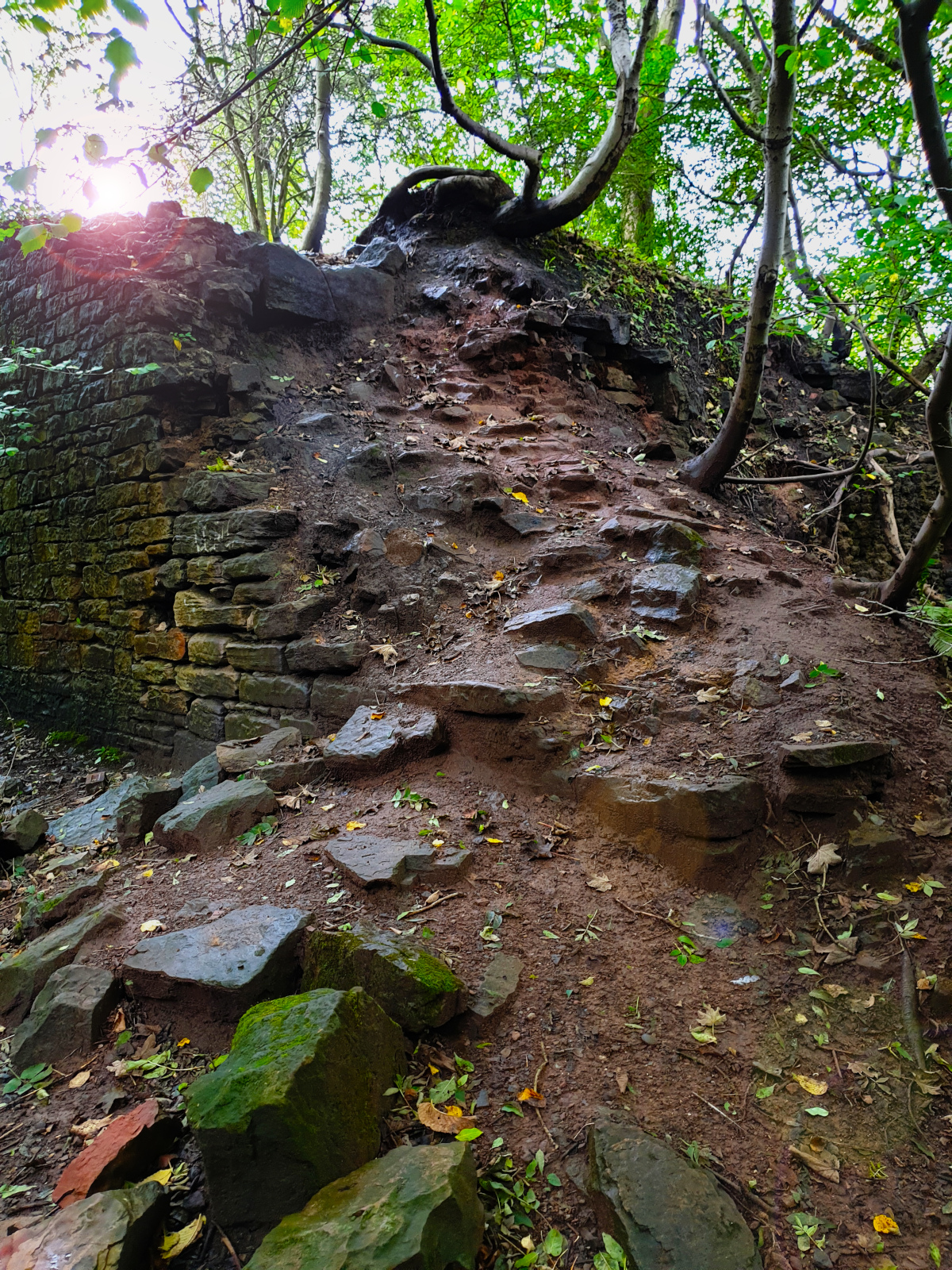
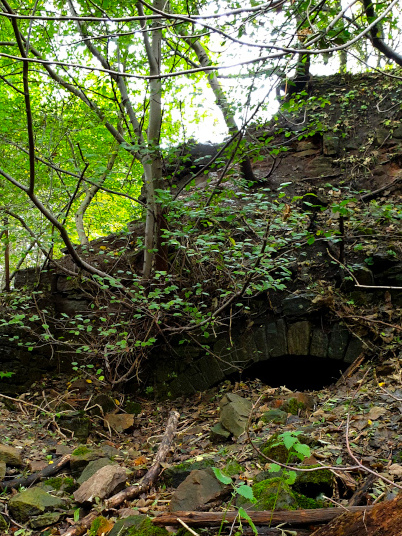
An ruined old stone structure in the middle of the woods! Quick, someone think of a story!

Way back then my daughter’s favourite request was “Tell me a pretend story, Daddy.” Naturally, reading one wasn’t good enough, it had to be a story that I’d made up on the spot. It was during one of these impromptu story sessions that we stumbled upon a ruined structure.

After playing on it for a while it was time for me to continue with the tale. Like a drowning sailor I clung to what was around me. The heroes of the tale, a young wizard girl and her impish brother, came across a ruined tower and rebuilt it as a Tower of Sorcery.

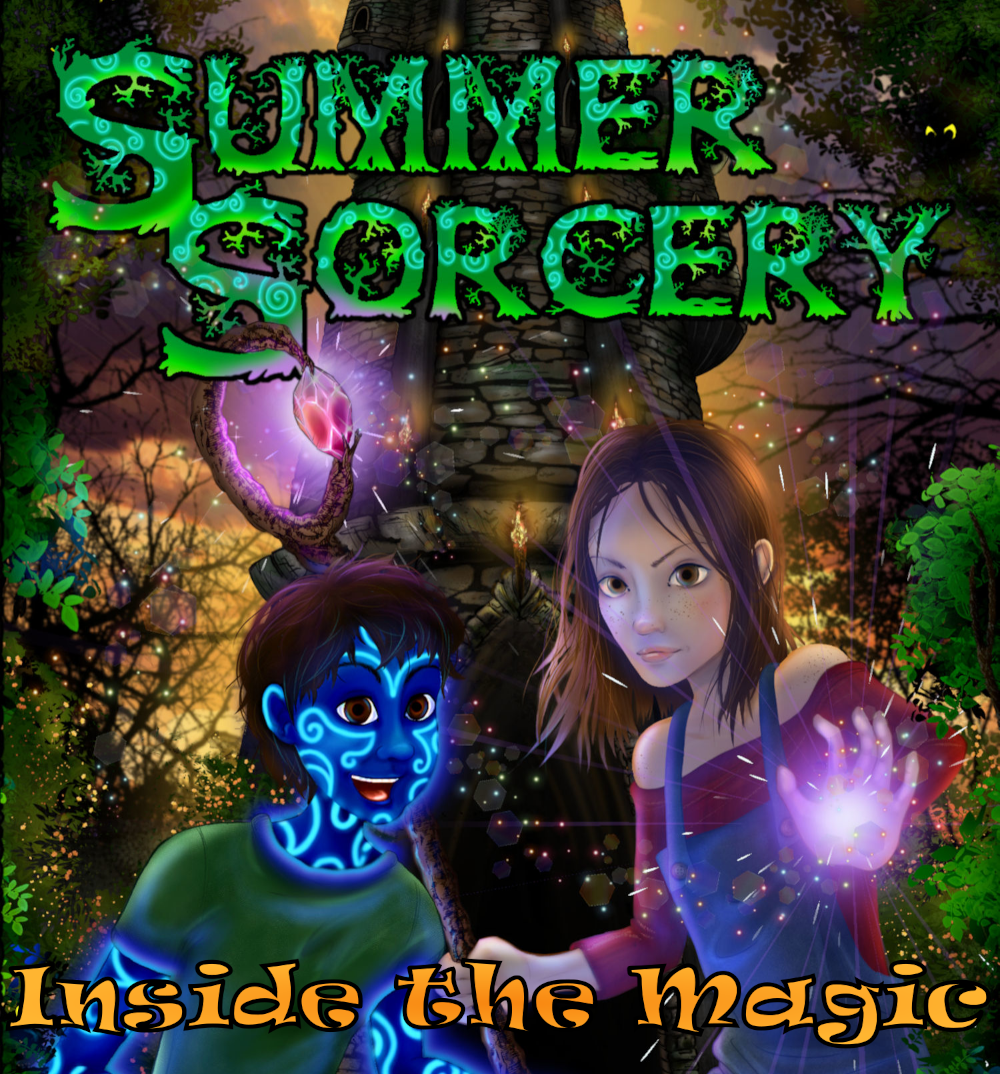
Something obviously captured their interest (thank goodness) as they asked me to re-tell it again and again. As is the way with these things the tale morphed and grew as I shamelessly embellished and revised it. Eventually we ended up with Summer Sorcery (and the rest of the series) as we know it today. In a very real sense you could say that the whole thing started right there at the ruins.

The structure is places inconveniently close to a path for purposes of a story, but it does make it easier for me to visit!

Of course, the Tower of Sorcery in the book is nothing like the structure in the woods. Even the ruins in the story bear little more than a passing resemblance to what you can see in the actual woods.

Imagination furnished me with the curving walls, the enormous door, the wide clearing around the ruins, and the dozens of other features that were needed for the fictional tower to work. Even then a bit of judicious retconning was needed to take the story where I wanted, and the architecture of the tower was not immune.

In the brick

I have a pretty visual imagination and I can usually call up my creations with near-hallucinatory clarity, a trait that served me well over the years. (Back at university it was like having a set of cheat-notes that only I could see.) However, I quickly found that my head-space was just a little too fluid to sustain the detail and topology of the Tower of Sorcery. It was too easy to skew everything to suit the needs of whichever paragraph I happened to be working on. Not really good enough. What I needed was a prop. Something physical that could serve as an anchor to stop descriptions and directions drifting.

Enter the LEGO brick. I am an utterly shameless AFOL (Adult Fan of LEGO), so you can imagine my joy at the notion that building a model could be meaningfully described as work! You know that thing people say about stuff that seems to good to be true? Yeah. Some fool got fixated on a round tower, didn’t he? Not so easy to build, it turns out. After a dozen or so abortive attempts I kicked the project to the back-burner where it belonged and wrote a bunch of notes about the tower instead. Like any sane person would. Like I should have done all along. However…

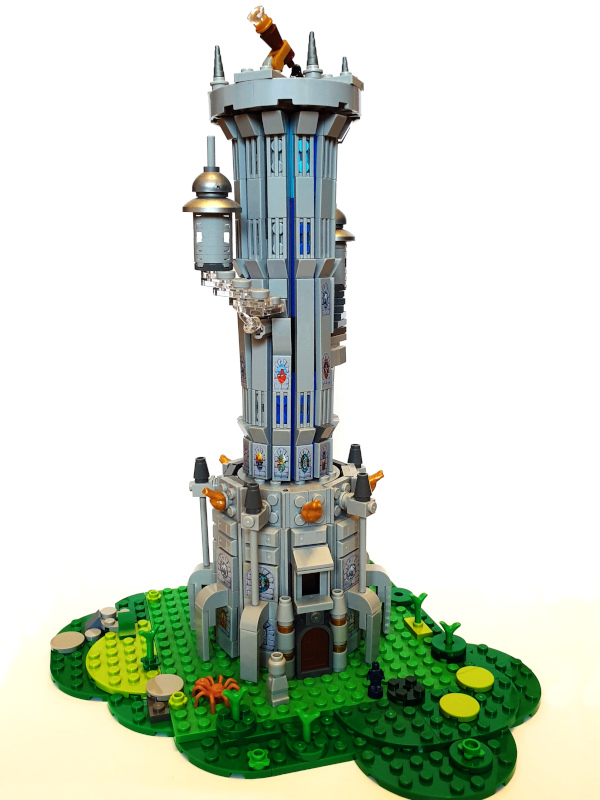
The Tower of Sorcery from The Wizard and The Imp. LEGO style

It got there in the end. At least, I think so. Complete with the ‘floating’ Turret of the WInds. I’m half-way tempted to paint or otherwise decorate the micro-figures to look a bit more like Malachite, Nyree and Elias. On the other hand that’s not a very LEGO solution.

It’s not perfect, and I suspect I’ll end up revising it again a few times, but for now I’m fairly pleased with it.

Building it also wasn’t a complete waste of time from point of view of the books. While commissioning the cover art I ended up sending the artist some photos of the model. So at last: a LEGO model as work! Living the dream.

Straying toward the truth…

All that fiction and imagination is fair and good, but what of the actual ruins? After all, they weren’t just put there for my benefit. It also strikes me as unlikely that I’d strayed within driving distance of the truth with my wizard’s tower.

So what actually was all that stonework doing half buried at the edge of the woods? I asked about in all the wrong places and got very little in the way of meaningful answers. In my defence, I’m a child of the 80’s I don’t always think of searching online before I’ve run out of other routes.

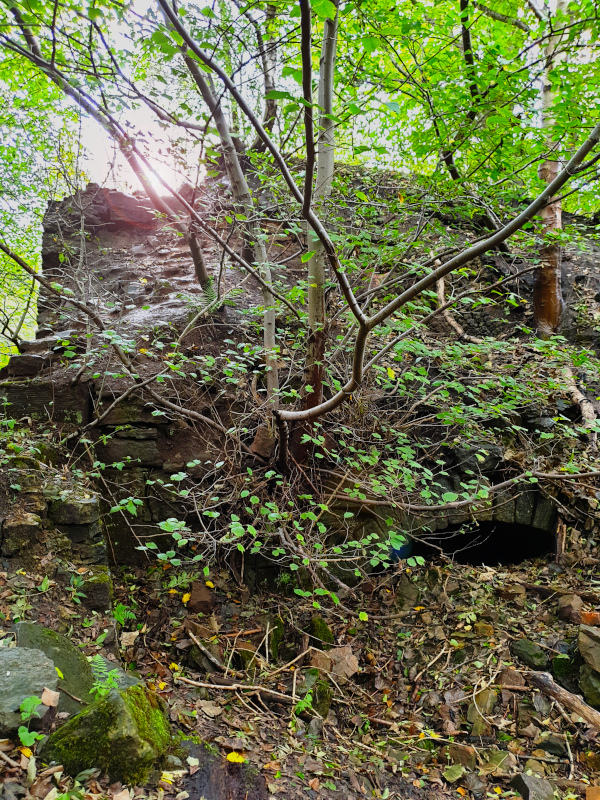
The top of an arch where the lime would be fired.

Now that I’ve learned the truth (thanks Google) I feel like I could have guessed really, given the visible structures and local history.

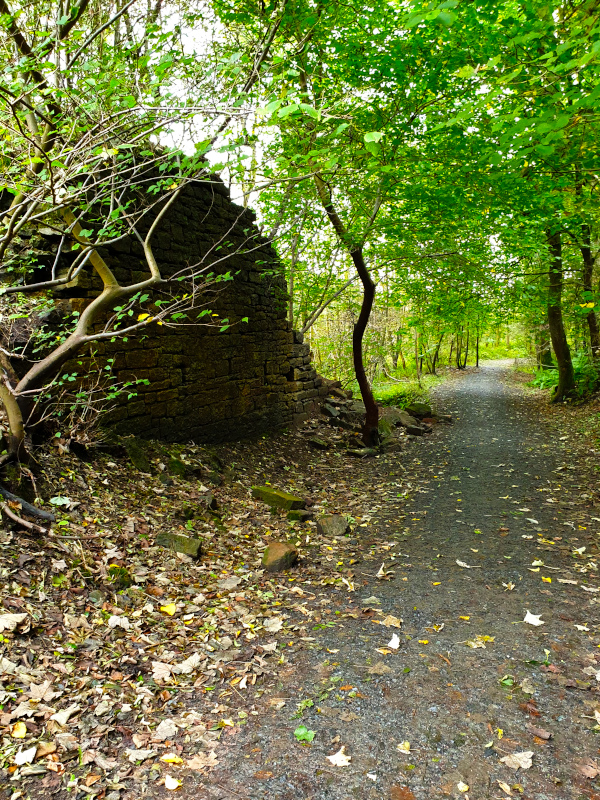
The path you can see in the photo a couple of sections ago runs along the track-bed of the old Halbeath Railway, which hints at an industrial purpose.

The structure is in fact an abandoned and partially back-filled lime kiln. Unsurprising really given that such things were so common around here that there’s even a town called Limekilns. Apparently the site was in use in the 19th century. As with all such things, I’m torn between delight at knowing what it actually was, and disappointment that it didn’t have a grander or more exotic purpose.

Okay, but where?

Fair enough. In case anyone wants to head out into the almost-wilds and see the place for themselves, Calais Muir Woods is at the eastern side of Duloch Park in Dunfermline, and can be accessed by paths from the back of the Duloch Sports Centre. For anyone who doesn’t fancy wandering through the woods hoping to stumble upon ruins there’s a suitably odd way to find it.

There’s an app and website called What Three Words which has divided the world up into 3mx3m squares. Each one is specified uniquely with three words. It’s linked to GPS so you can navigate to it fairly straight forwardly, so long as you know the magic words. In this case those are…

taps slippery operating.

So if I one day encounter someone wandering through the woods, waving their phone around and muttering nonsense, I will know why. We can nod sagely at each other and know that we are seekers of the Tower.

Next time…

Next time I’ll take a look at the other major location in Summer Sorcery: the Faerykirk, which is also a real place. In a more distant future we’ll go to Mackrie Moors, Fortingall, Balfarg Henge, and many other places. But I suppose I should get those books published first.

At the end of the day

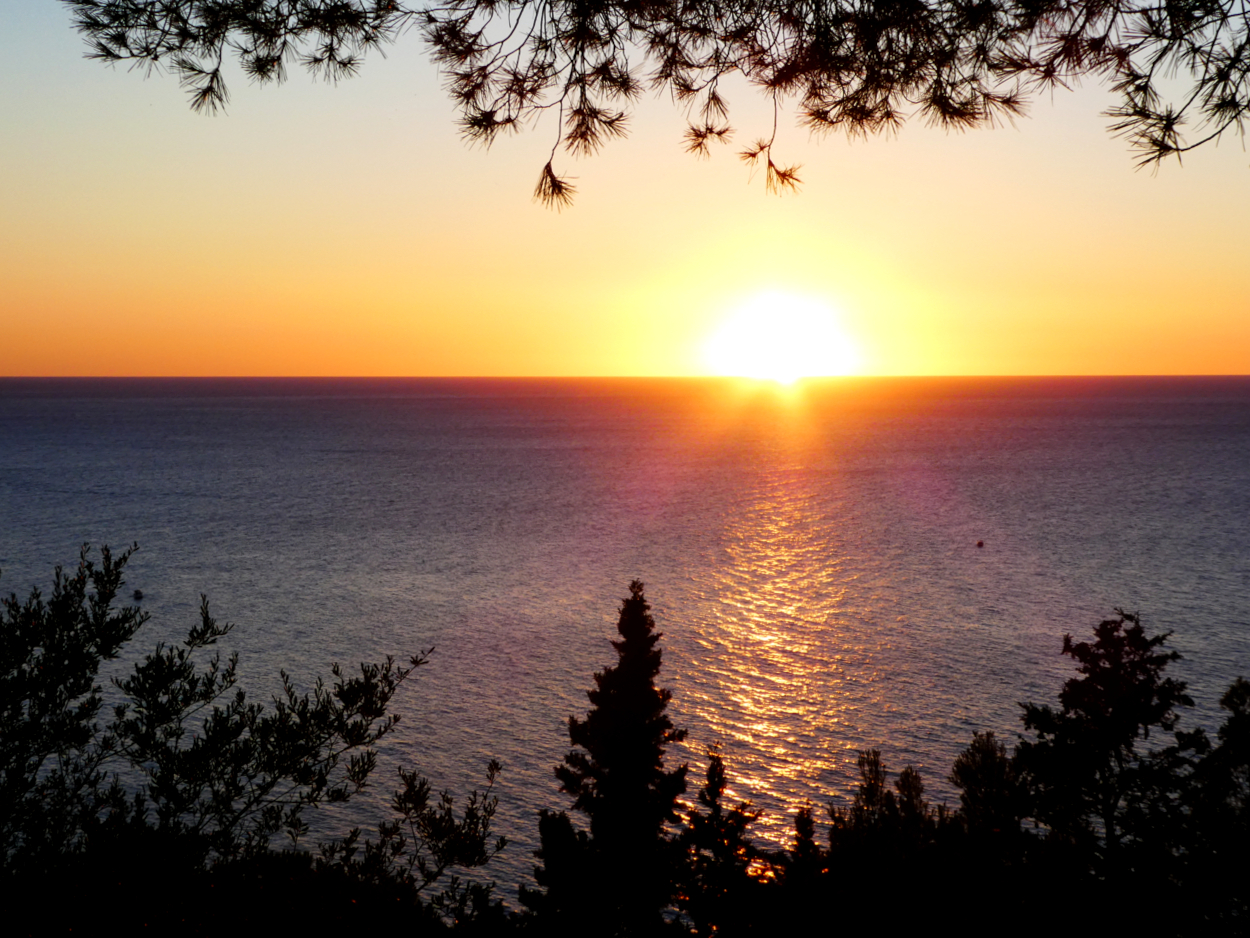
This week’s photo is from back in 2016. Certainly it seems to be from before my cameras did any automatic location tagging. OneDrive claims it was taken in Halbeath. If you know the area I’m sure you’ll agree that’s unlikely. The other photos I have from the same time offer no additional clues as to where I was when I took it, and I have no clear recollection. In my defence a whole bunch of stuff has happened since and 2016 seems pretty distant at this point.

So a bit of a mystery then. Surely a good thing in a writing prompt. Let’s replace ‘what is it?’ with ‘what does it want to be?’


I gazed across the water, toward the sunset and tried to feel, well, anything really. It was beautiful, I suppose. Bright flame highlights rippled on the dappled blue expanse. The dark back-lit trees whispered secrets into the wind. Some such torpid twaddle anyway.

Books were often like that. The ones I’d read, at least. They wax lyrical about such things as if they were of great import when really it’s just a ball of rock turning a little so a different part of its surface is in shadow. And yet somehow I’m supposed to feel something. Beyond boredom, that is. If trite novels were to be believed scenes like these were supposed to be packed with emotion and romance.

I tried to convince my sigh to be a little more like contentment. Maybe that was the trick. Fake it ’til you make it. Of course, attitudes like that are allegedly part of the problem. I’m meant to embrace the experience. Whatever that means.

This was supposed to be relaxing. A time to unplug and get away from it all. Unwind and let the beauty of it wash over me. Ridiculous. Can you think of anything more foolish than setting aside a fixed time, with a firm end-point. A deadline, if you will, by which you must be relaxed or else. You see the problem, right?

My attention strayed back to the ‘beautiful’ sunset. Thinking about it this was worse than getting me nowhere. Usually I was busy enough to drown out the nagging goblin of self-doubt. Now he was murmuring his poisons not into my ear but directly into my mind.

“This doesn’t move you because you’re dead inside.”

“Broken.”

“Freak.”

That same goblin raises its head when its time to dance. It is widely accepted that the urge to gyrate rhythmically to music is a universal human truth. Which is obvious nonsense. Just because music doesn’t spur you into motion doesn’t mean it doesn’t move you at all. A soul can exalt in its own way, can’t it? That doesn’t make it damaged, does it?

The thought is steadying. The sunset is no longer a trap to strip away my flesh and reveal a heartless robot within. Others may find the scene lovely, and I wish them every happiness in that. It’s a sunset and if it is less interesting to me then that’s fine. Your joy does not invalidate my experience, and neither does my apathy detract from yours.

A feeling of peace settling over me at last. Perhaps that’s what was meant to happen all along. Is that it? Do sunsets work on me after all?

As I turned away movement caught my eye. A blob of black had appeared in the water. I estimated it to be at least three kilometres away. To be visible at this distance whatever it was had to be enormous. I fumbled my binoculars out of my bag and pressed them to my eyes. With the sun where it was details would be hard to make out, but perhaps the silhouette would tell me something.

The focussing dial was stiff from disuse but as I dragged the image into sharpness my breath caught in my throat and my heart hammered a quick-step march. A long neck arched out of the water raising its proud head skyward. The creatures cry sang clear and crisp in the evening air. My binoculars tugged their cord then bounced against my chest. I started to run for the beach as a second cry split the air.

Gateway

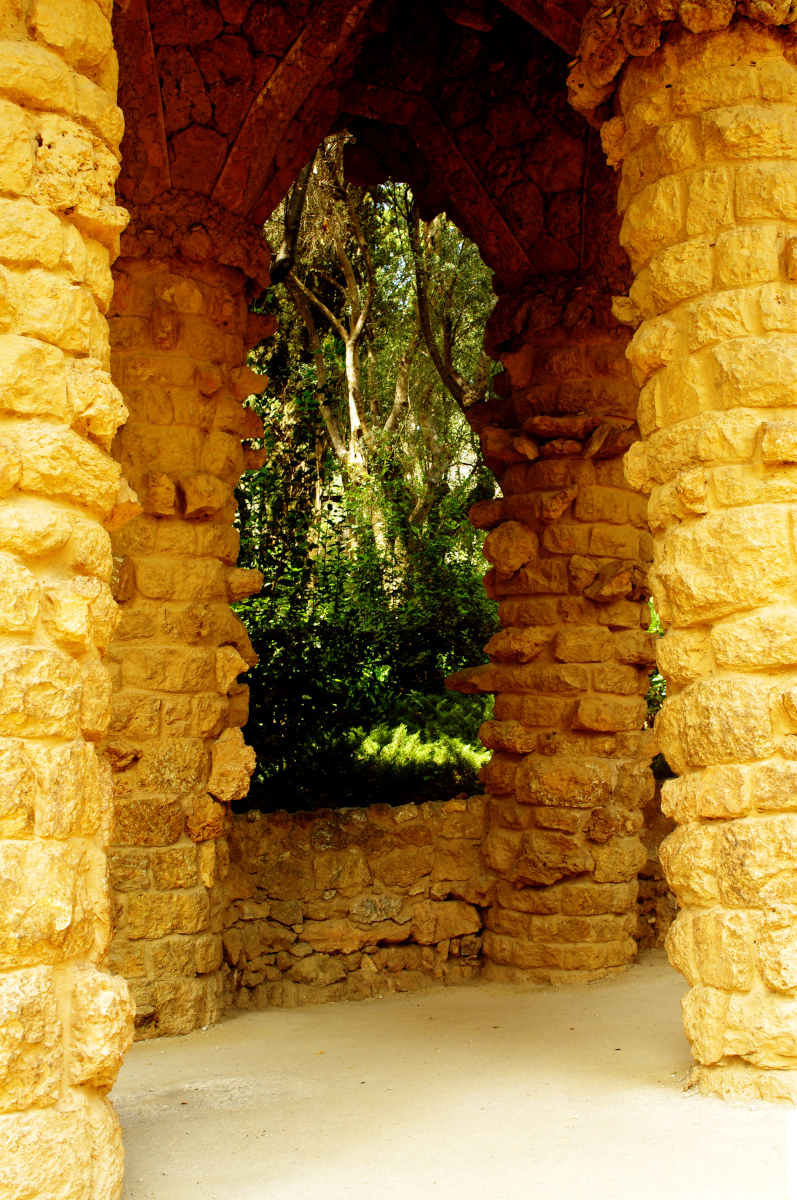
Back to Parc Güell in Barcelona this week. But first a bit of a confession: I’m not really that into architecture. It’s not that I dislike it or anything, and Parc Güell was definitely a sight to see. The whole place was a mixture of wild colour schemes and fluid curving shapes. Not a straight line to be seen. In my memory it was divided into separate zones, each with its own vibe, distinct from the others but integrated into the whole with a unifying ‘other-worldliness’.

I think it would be fair to say I don’t get it. The fault is entirely mine the place is a marvel. Go see it if you get the chance, then come back and tell me all the ways that I’ve got it wrong.


Beyond the arch the sun glowed gently through rich, damp vegetation. A soft breeze carried through moist air, cool and refreshing on Jay’s face. It was a stark contrast to the dry, dusty desert heat on his side. The dense thicket of lush greenery was breath-taking. So many plants in one place was utterly outwith Jay’s experience. On his side of the arch plants were spiky and grew in loose clumps, no more than a dozen in one place.

He’d been out playing with his brothers when they’d stumbled upon these ruins. Well, ruins wasn’t really the right word. Jay didn’t know what to call them though. The buildings, if that’s what they were, seemed at first glance to be crumbling to the edge of collapse. Up close though the rough, wavy stonework was solid and looked well maintained, despite the unnerving tilts and overhangs to the columns and walls. Maintained by who though? That was the question. The buildings sprawled massively in all directions, but there were no signs of life beyond Jay and his brothers. As they’d explored the sounds of their sandals echoed weirdly from the stonework and shortly after from the chasm walls beyond. Their voices called back to them eerily as they played among the stones. They would have heard if anyone else was there but when their playing ebbed in the afternoon heat the site fell silent as a tomb.

Jay wished he hadn’t had that last thought and shivered in the sun’s blazing heat. He wondered what it would feel like through the archway. He stalked closer to it, weaving back and forth so he could see more of the impossible landscape. Glancing to his right, he could see a completely different environment through that arch. That way lay wide grasslands as far as the eye could see. Just as alien in its way but somehow more comprehensible to Jay.

It occurred to him then that he should go get his brothers. Maybe they’d know what to make of these strange vistas. He shook his head as if to dislodge the thought. Being the youngest he was always last to everything. This time would be different. This time he’d be the one to go first. The one who knew what the others still had to learn.

A smile danced on his lips and lit his eyes as he rested his hand on the pillar that divided the two archways. Which one to choose? It wasn’t really a question, was it? He wanted to know what it was like to walk among trees. Leaning forward he could see the ground was made of a rich brown soil. Jay wondered what it would feel like between his toes. Not at all like the gritty burn from desert sands, he was sure.

He climbed the low stone wall under the archway and hung his toes out over the alien land. Behind him he could hear Marrom, his eldest brother, shouting his name. Should he go back? At least to tell his brothers about his find. No. This was his discovery. He wouldn’t loose it to them nor to anyone. He set his lips resolutely and jumped in.

The Witch

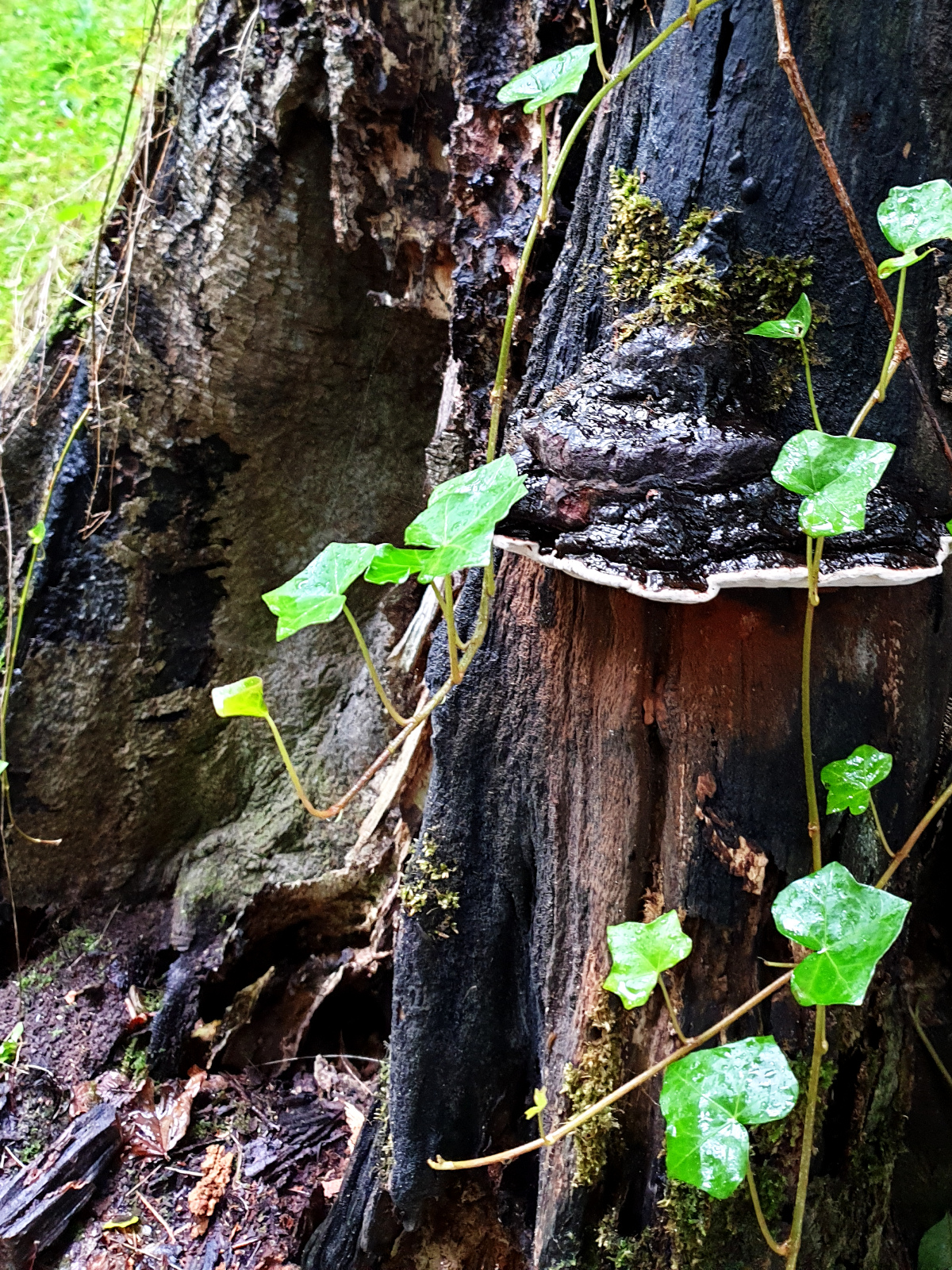
Another walk in the woods this week. Since visiting the Wild Food Festival in September we’ve been noticing far more mushrooms when we’re out and about. A clear case of observational bias — it’s not as if fungus populations have exploded in response. So I saw this bracket fungus in the woods and grabbed a photo of it for later identification. Not that I’ve actually looked it up yet, of course.

It wasn’t until I went back to look at the photo that I saw the face in the tree trunk immediately below the ‘witch’s hat’ shaped mushroom. Now I can’t un-see it. I am forced to wonder why the witch is in there. Was it magic gone awry? Was she trapped there for some reason? By who? What would happen if she got out?


Josie’s skin prickled as she walked past the Witchtree. Sensing a tingle of energy there was normal. Long ago the high-faeries had deployed powerful wild magics to entrap the witch-queen. Traces of that sorcery still left the air feeling thick and muggy. Today was different. A livid undercurrent spiked through the ancient fog of the high-faery entanglement spell.

Goosebumps tightened her skin as Josie stopped to regard the tree where the witch’s face, held in its aeons long scream, left an impression on the bark that was as much psychological as it was physical. She had skipped past the tree hundreds of times without ever really stopping to look. Even now, she felt a deep seated urge to move on that didn’t seem to come entirely from within her.

Josie closed her eyes and breathed slowly. As one of her village’s ambassadors to the faery folk she had been trained in sensing and understanding magic. She could even use some. Just a little. Nothing as grand as a spell, she could merely tug at the weave of magical energy that infused the world. Her mother had joked that they had high-fae in their ancestry. At least, Josie had always thought it a joke.

Now that she looked, the strands of power which formed the Witchtree stood out bold and strong against the background energies. She could see the subtle crafting that had gone into warping and weaving the magics. Most weavings that Josie had encountered lasted mere minutes. These had persisted for millennia and their beauty was still breath-taking. But there was something more.

Josie peered deeper, leaning in to sense the magic better. There! A twist that looked… wrong. A bunching of the fibres of power which defied the pattern around it. And a taste. Something bitter as wax and so desperately sad it brought Josie to her knees.

Reaching out she touched the lines of power. Not to interfere. She’d never do that! She’d never dream of tampering with another’s casting. Just to understand it better. The flaw was clear to her now. A green filament, almost invisible it was so thin, wrapped around the main skein of magic. She could tell it wasn’t supposed to be there. Most likely it was a stray thread of some dissipating spell that had snagged on the Witchtree weaving. Unbidden, her fingers found the thread and plucked.

The foreign filament broke and the Witchtree weaving relaxed back to its normal shape. Josie sighed in relief as the prickle settled to its normal feel. In the heartbeat when she shifted out of her Weaver’s Trance it happened. The weaving began to unravel.

Josie dived back in, trying to shove the strands of magic back together in a panicked rush. But she was no weaver. And to match the skill required for the Witchtree weaving would take centuries of careful study. But Josie was human. Even if she’d wanted to, and young though she was, she hadn’t the time to learn a fraction of what was needed.

A hand rested softly on her shoulder.

“Thank you, Josie,” said a young woman’s voice.

The Weaver’s Trance fell away and Josie looked up to see a girl. 16 perhaps? Maybe younger. Barely older than Josie, certainly. Her dark hair was greasy and unkempt and framed a face so pale it was almost transparent. Her grubby green dress was covered in patches of lichen and torn where ivy suckers had been pulled away. Magic sparkled in her eyes. Not the steady, even, yellow glow that filled the eyes of the high-fae. Pinprick green lights filled the girl’s pupils and danced and swirled to a lilting rhythm.

Josie threw herself backward. Her feet slipped and she fell, autumn mud staining her bright red cotton tunic.

“Peace, Josie,” said the girl. “I mean you no harm. You’ve freed me from my prison and, unlike the high-fae, I don’t turn on my friends.”

“Are you the witch?” was all Josie could manage. Pathetic, really. She knew the answer already.

The girl nodded.

“What are you going to do?”

The witch smiled as warmly as a summer sun. “That,” she said, “is the best question I’ve heard in over three thousand years.”

Hunter’s Moon

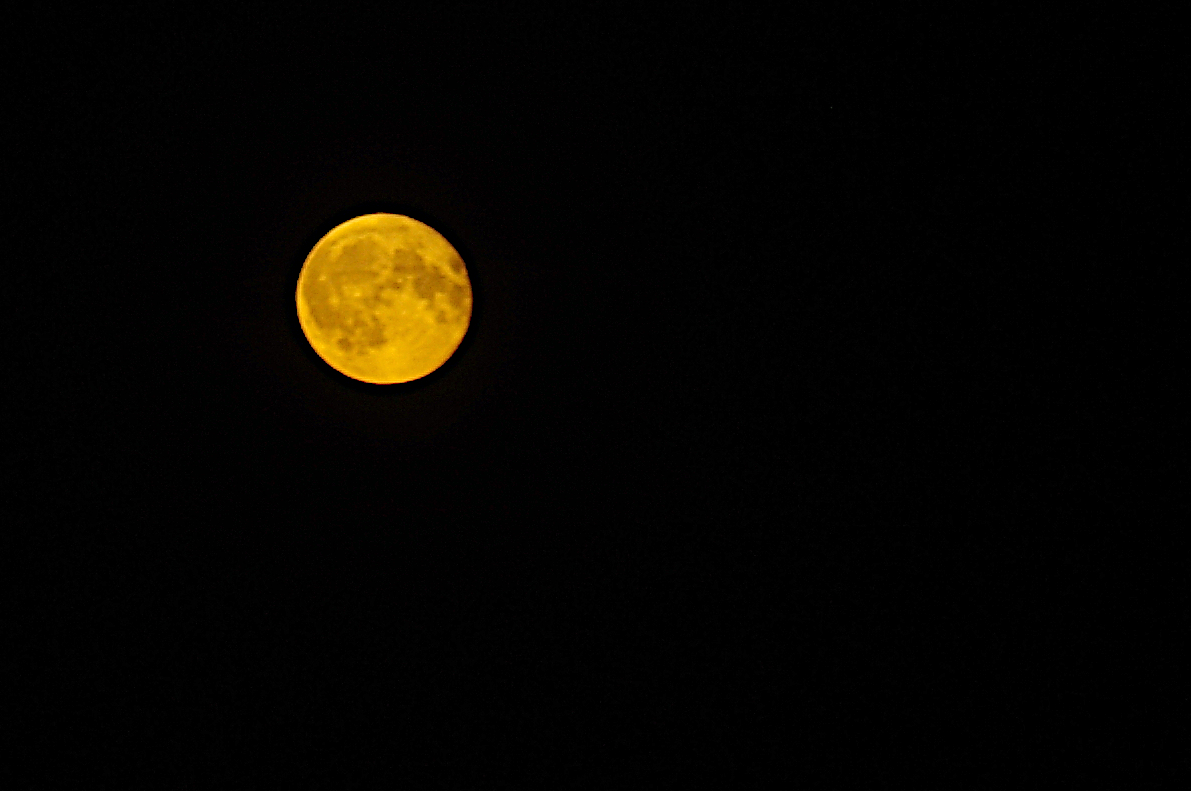
This week’s story prompt brings us back to my family’s second ever camping trip. At that point we knew next to nothing — pitching the tent was still an achievement. We’d picked a lovely campsite in the North of England about 100 metres from a beach. Delightful. Until the next morning when we’d accumulated what felt like 50 litres of dew. Lesson learned, camping is now a distinctly inland pursuit for us.

Before we woke up damp we were treated to an unobstructed view of a beautiful full moon. Apologies for the less than stellar photo. In my defence it was hand-held with a not exactly fast lens. One day the opportunity will present itself and I’ll have another go.

At the time we weren’t bold enough to camp in October, so the photo is most definitely not an actual hunter’s moon. Let’s not let the truth get in the way of a tale though…


The howl carried clear across the stubble-cropped fields making my skin prickle in anticipation. My sisters and brothers of the pack always made the change before me. That was proper, of course. In my place as the pack omega my job was to bring up the rear. My packmates could learn from my mistakes. Stem their boldness through witnessing my blunders. Observe the cost of undue caution. Mine were the faults by which the pack ran true.

To my left another howl rose to chorus with the first. That would be Jack. He was always in a hurry to join the hunt. I recognised Emily’s cry instantly as it lifted to meld with the first two. She was my best friend in the world, both with the pack and at school. That friendship cost her in both realms. At school I was the outsider. A Glaswegian among a bunch of Fifers. Within the pack I was the bottom of the heap. Either way associating with me ruined any status she might have otherwise found. She claimed not to mind, bless her, but I can’t see how. It seemed to me that being friend to the omega was worse than actually being omega. My legendarily poor judgement served a purpose. Emily’s made her look weak in the eyes of the pack.

I could see the moon’s rich yellow glow through the trees on the crest of the hill behind my house. Three more voices joined the lupine choir. With the gloaming my senses heightened. The night air brought the scent of deer to my nose. My ears were quick to catch up, snagging the sounds of movement in the thicket over the deserted country road.

Another pair of voices howled their unfettered joy into the skies. Olivia and Sophia, the twins. Just Alex, our alpha to go. And me, obviously.

The moon cleared the trees at last bathing me in its borrowed light. The change was upon me at last! Goosebumps lifted hairs which thickened and lengthened. My face stretched baring sharp white teeth ready to tear fresh meat. Hands that were now paws met the ground at a run. My sense of smell, heightened before, shifted into overdrive bringing the deer so close I could taste it.

I checked both ways before dashing across the road. Whatever those stupid stories claim, my mind was my own. Neither wolf nor boy but both at once. Human intellect and wolfish cunning. My paws met the soft earth of the field. Ten paces further and I was in the forest.

I could tell my quarry had not yet heard me. Perhaps this night would bring gory glory. Then again, perhaps my pack would once again learn from my blunders. It mattered little. I swerved to the left, putting the deer between me and the rest of the pack and raised my voice in a howl declaring that the hunt was on. The Werewolves of the East Neuk ran free. We would taste blood that night.

Magic in The Wizard and The Imp, and other stories.

As with many fantasy stories, magic is at the heart of Summer Sorcery (and the rest of The Wizard and The Imp series). Like most elements in story-craft, magic is something of a double-edged sword. Undoubtedly it is an excellent way to inject wonder into a tale, and wonder is one of the main currencies that story-tellers trade in. The flip-side is that it is equally easy for magic to break the wonder that it was supposed to create.

As a child I remember encountering stories that left me thinking ‘why can’t they just cast a spell to <insert relevant solution here>?’ The answer, sometimes, is ‘because it would ruin the story.’ Fair enough, but that’s almost as pathetic a reason as ‘he woke up and it was all a dream’. We can do better than that. Better answers might be of the forms:

  • Because magic has a cost, or
  • Because she doesn’t know that spell, or
  • Because magic doesn’t work that way.

Now we’re getting somewhere. What all those answers have in common is that the magic is constrained. Without those constraints we are at the mercy of the Deus ex Machina consigning our stories to the drivel-bin. In some stories these constraints are central providing, or at least informing, the central conflict that the main character is to overcome. In others the constraints are more coincidental, preventing the characters from running amok and ruining the drama.

Before we jump into how magic sits within the world of The Wizard and The Imp, let’s take a look at how else it might have been.

The Three Wishes and other omnipotences

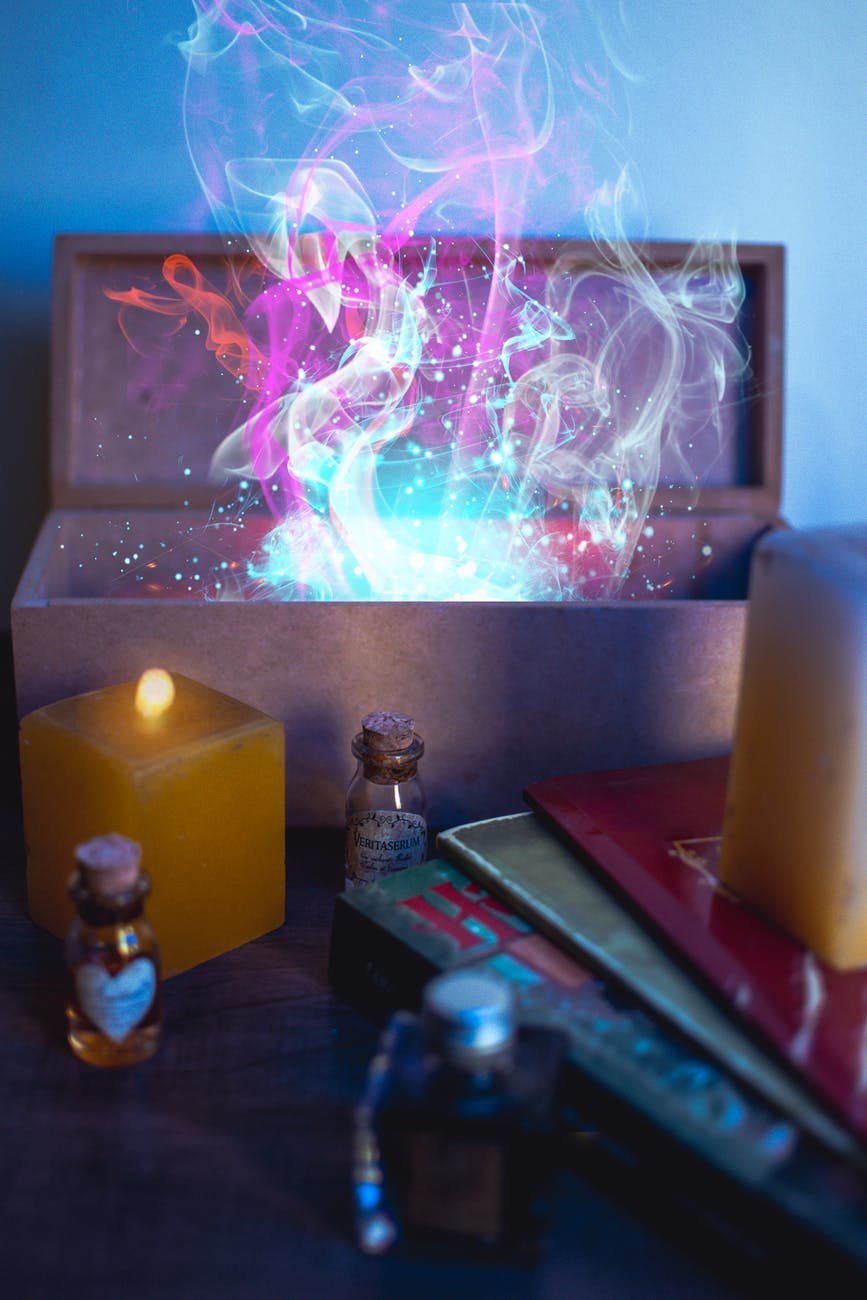
Photo by Nita on Pexels.com

Harking back to folklore and other antiquities tales in which an ordinary person is granted wishes by some supernatural agent, be it a genie (Aladdin), a fairy (The Three Wishes), or some artefact (wishing wells and the like). In tales such as these the magic is itself practically unbounded. With wish magic practically any outcome, situation, or possession can be requested and granted.

On the face of it, that sounds fairly unconstrained, but on closer inspection that’s not the case. Firstly, the wishes are usually constrained in number. Typically wishes in stories come in threes. (Or are there stories out there like ‘The 67 Wishes’?) I’m sure there’s a good reason for that special number hiding within literary analysis, and if not there’s likely a neuro-cognitive cause lurking in the background. Whatever the number the important point is that the only thing standing between our hero and happily ever after is that our desires are generally infinite whereas our opportunities are far more limited.

In some narratives, the devil is in the details. Classic warning tales of being careful in what is wished for fill countless story books. Each one relates the tale of the intention of the wish being twisted to the granting entity’s will because the words of the wish are not carefully considered. The limit on the magic is nothing less than the cleverness of the wisher. Unfortunately for the poor woodsman who doesn’t think before he speaks his longing of a delicious black pudding.

Introducing constraints

In a good deal of fiction the magic is not limited by occurrence. Indeed it is frequently abundant. In stories such as the Harry Potter series characters are able to cast spells as often as they like. Magic in Tolkien’s Middle Earth is both more pervasive and more mysterious, being embodied by elves and ents, but only directly wielded rarely and only by singularly powerful characters.

In both cases although magic is abundant, we also get the impression that it operates within boundaries. It is never the case that Gandalf can raise his staff, nor Harry his wand, and cast a mighty spell that in one fell swoop solves all their problems. Gandalf’s magic use seems largely limited to lighting things up or setting them on fire, while Harry is constrained by which spells he knows.

Even with just these examples we get a division between inherent limits on the magic itself and the personal limits of the caster. That line is not a hard one, indeed Tolkien strayed back and forth across it. Consider Galadriel’s scrying magic and Gandalf’s fire magic but then contrast it to the seeing-stones (Palantir), and indeed the various rings of power, which can only be used fully by those with enough strength of will/wisdom/natural potency.

Magic in the Potterverse seems to come down on the personal limits side of the equation. The sorcery itself seems entirely unbounded — anything is possible, so long as the wizard has the strength of character to cast the spell.

We see a similar model in the Dragonlance stories. For better or for worse, these books are based on adventures within a role-playing-game. In this case the Dragonlance variant of Dungeons & Dragons, though there are other D&D settings that have made it into narrative fiction. Because this gaming origin, the limits on spellcasting has to be more mechanistic, though possibly more contrived seeming. Here spells can be cast at most once per day. There’s a whole thing about the words burning out of the caster’s mind as the spell is formed. It always seemed to me that Hickman and Weis, the series authors, didn’t care for that artificial limiting mechanism: they also added that spell work took a physical toll, leaving the caster exhausted through too much magic.

Personally, I rather like the notion of magic coming at a direct and immediate cost. It seems both good storytelling and a manageable and extensible mechanism. Great feats can be achieved if the sorcerer is willing to pay the (equally great) price. To me, this is the crux of good fiction — make your choice and suffer the consequences, or just walk away and live with what follows.

Systematic Magic

Photo by Vinu00edcius Vieira ft on Pexels.com

As a recovering engineer, one of my favourite limiting mechanisms is systematic magic. In this, the magic is not merely constrained by a few limiting factors. Instead the magic ‘works’ in some predictable, or at least understandable manner. A set of rules exists that would allow the reader to figure out what is possible and what is not within the story world.

This is something you see a lot in non-children’s fantasy. Well, I do at least! Walk into your favourite (independent, naturally) bookshop and pick up a book from the fantasy section. In fairness, the chances are it will be by Brandon Sanderson, who makes the rest of us look like a bunch of wastrels. Sanderson is a master at constructing a set of strict rules under which magic works. He has half-a-dozen (at least) different worlds, each with a different system though each one relates to the others in some way.

He’s not alone, however. Peter V. Brett’s Painted Man series has magic manifested through various symbols called wards. Much of the fun, for me at least, was thinking ahead to what might be possible because of the implications of what you’ve just read.

Similarly, Brent Weeks’ Lightbringer series is a veritable mental playground. Here magic is manifested through light of different colours. Each colour has different properties and (kind of) obey natural laws to boot. I lost countless hours imagining all the uses they could be put to.

The big downside of systematic magic is that it can be exposition heavy. No one (even me, truth be told) wants to wade through pages of explanation on how the clever magic operates. As a reader what I want in the moment is for magic to be, well… magical.

Potions

Magic potions are something that come up too often to ignore here. Everyone knows some variant of the eye of newt and toe of frog scene from Shakespeare’s Macbeth. These seem to be typical ingredients for potions: from The Bard, to Dahl’s Witches and George’s Marvellous Medicine, through the Worst Witch, right up to the Potterverse the schema seems to be indiscriminately chuck in disgusting items. Chants and incantations are optionally included.

This always seemed odd to me, though. Potion craft seems like cooking or baking. In neither real world discipline can you throw in whatever you fancy. Different types of ingredient have different properties which affect the end product. Magic potions ought to follow the same pattern, surely.

Enter ‘Just Add Magic’ by Cindy Callaghan. Small confession, I watched the TV adaptation with my daughter, I haven’t made the time to read the original story yet. I hope and trust that they are similar! Either way, magical ingredients fall into a variety of families each with distinct properties. The ingredients interact with each other in a satisfying way when incorporated into ‘normal’ food recipes to produce a magical (and usually delicious) effect when eaten. The system had just enough vagueness that there was plenty of wriggle room for storytelling without feeling like it blatantly broke the rules.

Putting it together in The Wizard and The Imp

So how does all this come together in The Wizard and The Imp?

It was important to me from the beginning that there should be some underlying system behind the magic. However I wanted to avoid something that would require massive explanation early on to make any sense. Throughout childhood, and indeed beyond, the two pillars of my life have been rigorous systems and flight-of-fancy imagination. (It makes sense in my head, at least!) The magic in Summer Sorcery had to reflect both, and it had to do it in a readily graspable manner.

Wizardry splits into two broad areas: sorcery and spell craft. The sorcery is wild, free imagination. Simple ideas held in mind until magical energy is channelled through it. This gives us the building blocks of a wizard’s arts. Spell craft brings these blocks together to build up more complex magic and achieve more intricate things.

By wizardry isn’t the only aspect of magic I explored in the series. Faery magic is something else again. Like other faeries, the Imp is an embodiment of magic. Here I wanted to contrast the more systematic magic of wizardry, but still do it in a way that ‘makes sense’. So each faery being has gifts which are ultimately an expression of their core nature. This, obviously, could quickly get out of hand, and I wanted a common element to run across all of faery kind. To the rescue came the faery glamour. The glamour has a rather wonderful property for a storyteller: it can make anything seem to be. That gives us the unbridled freedom of untamed magic, while simultaneously reining in the ‘one fell swoop’ problem. If Elias the Imp or the other faeries can imagine it they can form the illusion. But ultimately that’s all it is. An illusion. You could imagine a sword or a club, then hit someone with it. If you were good you could make them believe they were hurt. What you couldn’t do is actually injure their body.

Later in the series I add another form of magic: witchcraft. This is distinct from both wizardry and faery magic. It comes with its own constraints and its own freedoms. I had a lot of fun seeing how far I could run with the idea. After all the women and men (yes, witches aren’t gendered any more than faeries are) who use witchcraft do so exclusively. It would pervade every aspect of their lives and they would use it as fully as they could, in much the way that we poor non-magical folk use our hands or our words or our eyes as fully as we are able.

The final element of magic in Summer Sorcery is potion craft. Again this wasn’t thrown in at random. Potions gave me two neat features. Firstly, it provides a means of magic persisting before being used. Everything else in the stories is immediate. It happens when cast and lasts as long as it lasts. For some situations (like the opening chapters) I needed magic to persist in a dormant state until called on. Secondly, it gave me another system to play with. A much more rigorous system at that. Potions allowed me an excuse to delve into real-world folklore to see what properties people have (and still do, sometimes) ascribe to different things. I always love it when fantasy stories are grounded in real folklore. To me it lets them reach beyond the page and bleed into the world around me. I suspect I’m not alone in wanting a bit of extra magic about just now.

The Spell

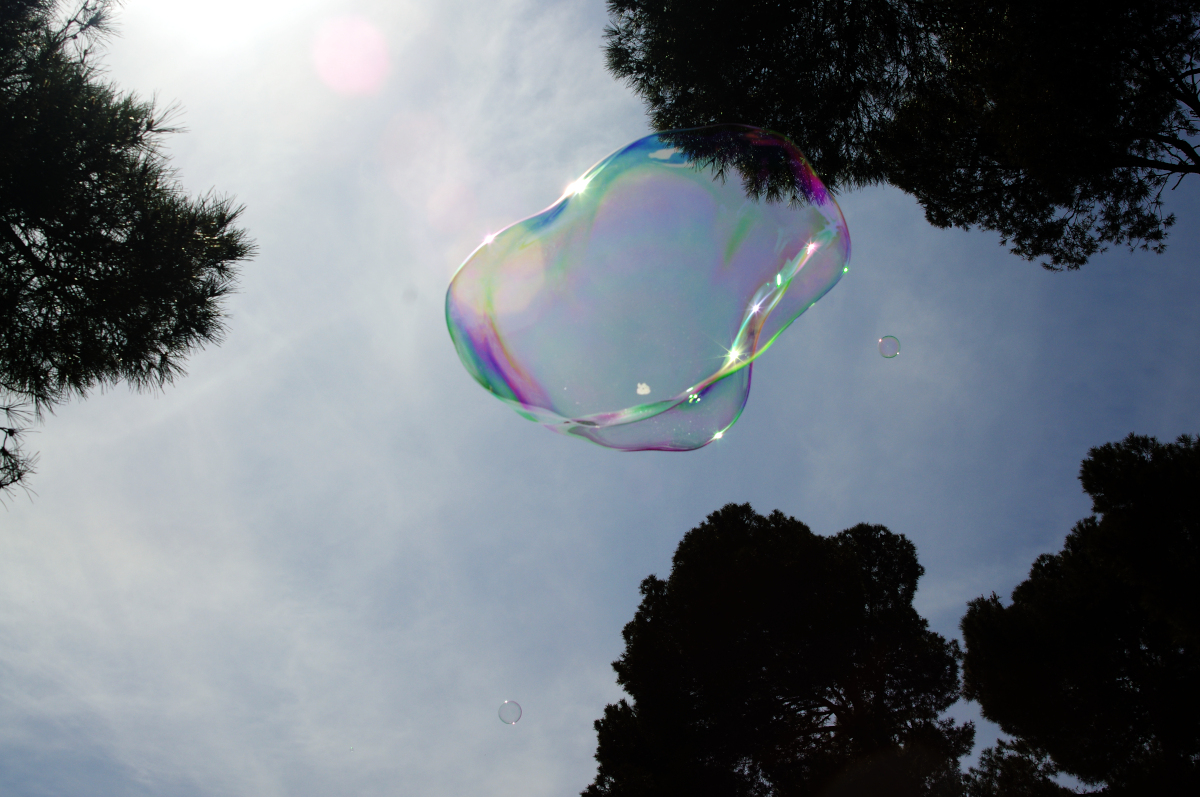
This photo is dragged from the archives from a trip to Spain a million years ago. As I recall it, having spent a lovely morning in Parc Güell, our objective became to get lost in Barcelona. My thinking has always been that you see more of a place when you’re hopelessly lost. It ‘s a strategy that also happens to play to my strengths.

The downside of this approach to tourism is that I couldn’t tell you where we ended up. I do recall the lovely park that we happened upon at the perfect time. The kids were hot and knackered and minutes from total melt-down when someone pitched up and started making giant bubbles. My children spend a happy while playing among the shimmering orbs, which bought us enough time to figure out how to get back to the car and home for much needed ice-cream.

What follows is, as ever, entirely unrelated…


Janet collapsed back into the long grass. Above her the spell glittered in the afternoon light, poised to be carried on the breeze to its destination. This one had really knocked the stuffing out of her. It was a source of some worry that casting was becoming harder.

She frowned up at the colours dancing over the surface of the spell. A tough casting was often a sign of faults in the fabric of the spell. There was nothing wrong with this one, though. Not that she could see, anyway. In ages past she would have had another fairy take a look. A fresh pair of eyes was always a help. It was always difficult to spot flaws in your own creations. Each piece of magic was a tiny, renewable, sliver of soul-stuff sent into the world to heal the wounds and wear of billions of beings living their lives. Finding imperfections in your own spells was hard. A skill that Janet had had to work on.

A second opinion wasn’t possible now. There were so few of them left. Once World Wardens had been everywhere, working their magic in harmony with a young world full of vigour and promise. The possibilities had been boundless and together they had been more than enough. The world had thrived.

But that had been before the Blight. It had taken so many of her brothers and sisters. Good fairies who had served the world well for eons. She didn’t understand the Blight. No one did. Not fully. What she knew chilled her to the core. Some metaphysical darkness took them. Changed them. The Blighted lived a horrid half-life confined to shadows. Their magic, when it came at all, was a weird, corrupted thing that brought no peace to the world. Blighted magic was selfish. It delivered joy only to its caster and none other.

She shook off the dark thoughts. For all Janet knew thinking like that was how the Blight took hold of a fairy. The downward spiral of its lullaby should be resisted. She looked up again at the perfect globe of her spell. Against the vastness of the sky it was tiny. A speck of hope against a sea of indifference. Could it possibly be enough? It would have to be.

Janet dragged herself to her feet. Flexing her wings she took stock of her surroundings. A final scrap of woodland in a jungle of concrete and tarmac. A last bastion of nature. And yet life still thrived here. Leaves rustled under the hooves of a passing deer. Beneath the ground a sett of badgers slumbered, peacefully awaiting the evening’s hunting. The air was alive with buzzing wings. The world had not given up, and while that was true neither would she.

Magic thrummed through her veins as Janet summoned her power and cast another spell.